
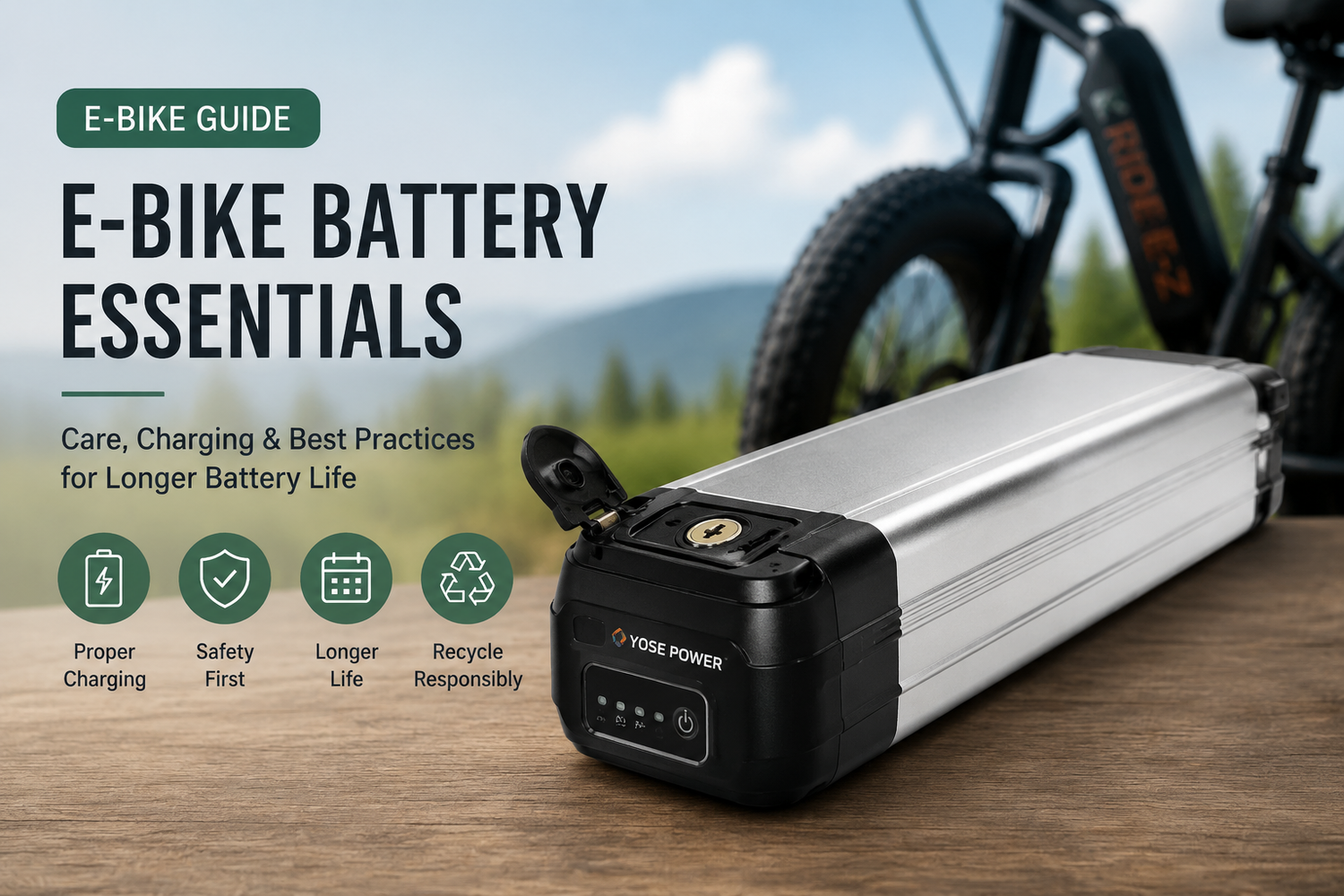
An eBike battery is one of the most important parts of the bike. It gives the rider power, range, and convenience, but it also needs to be handled and cared for properly.
Most eBikes use lithium-ion batteries, which are common in many everyday products, including phones, laptops, power tools, electric vehicles, scooters, and eBikes. These batteries are powerful and efficient, but like any electrical product, they should be charged, stored, and maintained with care.
Here are some important eBike battery safety tips every rider should know.
1. Always Use the Correct Charger
One of the most important safety rules is to use the charger that came with your eBike or a charger approved by the manufacturer.
Not all chargers are the same. Using the wrong charger can damage the battery, cause overheating, or create a safety risk. Even if another charger looks like it fits, that does not mean it is safe to use.
Before charging, always make sure the charger, battery, and connection points are clean, dry, and in good condition.
2. Do Not Charge While Sleeping or Away From Home
It may seem convenient to plug in your eBike overnight, but it is safer to charge the battery while you are awake and nearby.
Try to charge your eBike in a place where you can check on it. Once the battery is fully charged, unplug it according to the manufacturer’s instructions.
Avoid leaving the battery charging for long periods after it is full.
3. Charge in a Safe, Open Area
Where you charge your eBike matters. Charge the battery in a dry, open, well-ventilated area away from anything that can easily catch fire.
Avoid charging near beds, couches, curtains, paper, cardboard, or clutter. Do not block doorways, hallways, or exits while charging. If there were ever a problem, you want to be able to leave the area safely.
A garage, utility area, or open space away from living areas may be a better charging location when available.
4. Inspect the Battery Regularly
Before riding or charging, take a quick look at your battery. If you notice anything unusual, stop using it until it can be inspected.
Warning signs may include:
- Cracks or damage to the battery case
- Swelling or bulging
- Leaking
- A strange odor
- Excessive heat
- Unusual sounds
- Smoke
- Charger or cable damage
- Loose or damaged connectors
If a battery looks damaged or acts differently than normal, do not charge it or continue riding with it.
5. Keep the Battery Away From Extreme Heat and Cold
Temperature can affect battery performance and safety. Avoid leaving your eBike battery in direct sunlight, inside a hot vehicle, or near heaters.
Cold weather can also reduce battery range and performance. If possible, store and charge the battery at normal room temperature and follow the manufacturer’s recommended temperature guidelines.
Taking care of the battery helps protect both safety and long-term battery life.
6. Do Not Modify the Battery or Electrical System
Never open, modify, repair, or rebuild an eBike battery unless you are properly trained and qualified to do so. The same goes for the charger, wiring, controller, and other electrical parts.
Modifying the electrical system can create serious safety risks and may void the warranty. If something is not working correctly, contact the manufacturer, dealer, or a qualified eBike technician.
7. Be Careful With Aftermarket Batteries
Replacement batteries should be treated carefully. Always use a battery that is designed for your specific eBike model and approved by the manufacturer.
Cheap, incorrect, damaged, or unapproved batteries can increase the risk of electrical problems. A replacement battery should match the bike’s requirements and come from a trusted source.
When in doubt, check with the manufacturer or seller before buying a replacement.
8. Store the Battery Properly
If you are storing your eBike for a while, follow the owner’s manual for battery storage instructions.
In general, batteries should be stored in a cool, dry place away from direct sunlight, moisture, and flammable materials. Do not store the battery where it can be crushed, dropped, punctured, or exposed to extreme temperatures.
It is also a good idea to check the battery occasionally during long-term storage.
9. Transport the Battery With Care
When transporting your eBike, make sure the battery is secure. Avoid dropping it, hitting it, or allowing it to move around loosely.
If you remove the battery from the bike, keep it protected during transport. Do not place heavy items on top of it, and avoid storing it near sharp objects or liquids.
A damaged battery should never be ignored.
10. Know What To Do If Something Seems Wrong
If your battery starts smoking, making popping sounds, giving off a strong odor, swelling, leaking, or getting unusually hot, move away from it and call emergency services.
Do not try to use the battery again. Do not bring a damaged or overheating battery inside your home. Follow local fire department guidance and dispose of the battery properly through an approved battery recycling or disposal location.
Lithium-ion batteries should not be thrown into regular trash.
Final Thoughts
eBike batteries are safe and reliable when they are properly made, properly charged, and properly cared for. A few simple habits can make a big difference.
Use the correct charger, avoid charging overnight or unattended, inspect the battery regularly, store it properly, and never use a damaged or questionable battery.
Your eBike battery is what keeps your ride powered. Taking care of it helps protect your bike, your home, and your safety every time you ride.



Leave a comment
This site is protected by hCaptcha and the hCaptcha Privacy Policy and Terms of Service apply.