
E-bikes are becoming a popular choice for hunters, anglers, farmers, campers, and anyone who spends a lot of time outdoors. They are quiet, efficient, easy to transport, and useful in places where a full-size vehicle may be too large, too loud, or unnecessary.
Whether you are heading to a hunting blind, checking a fence line, riding around a campground, or carrying gear down to the water, the right e-bike can make outdoor travel simpler and more comfortable.
Why Outdoor Riders Like E-Bikes
For outdoor use, an e-bike gives you a practical middle ground between walking and using a truck, ATV, or UTV. You still get fresh air and maneuverability, but the electric assist helps take the strain out of hills, longer distances, and uneven ground.
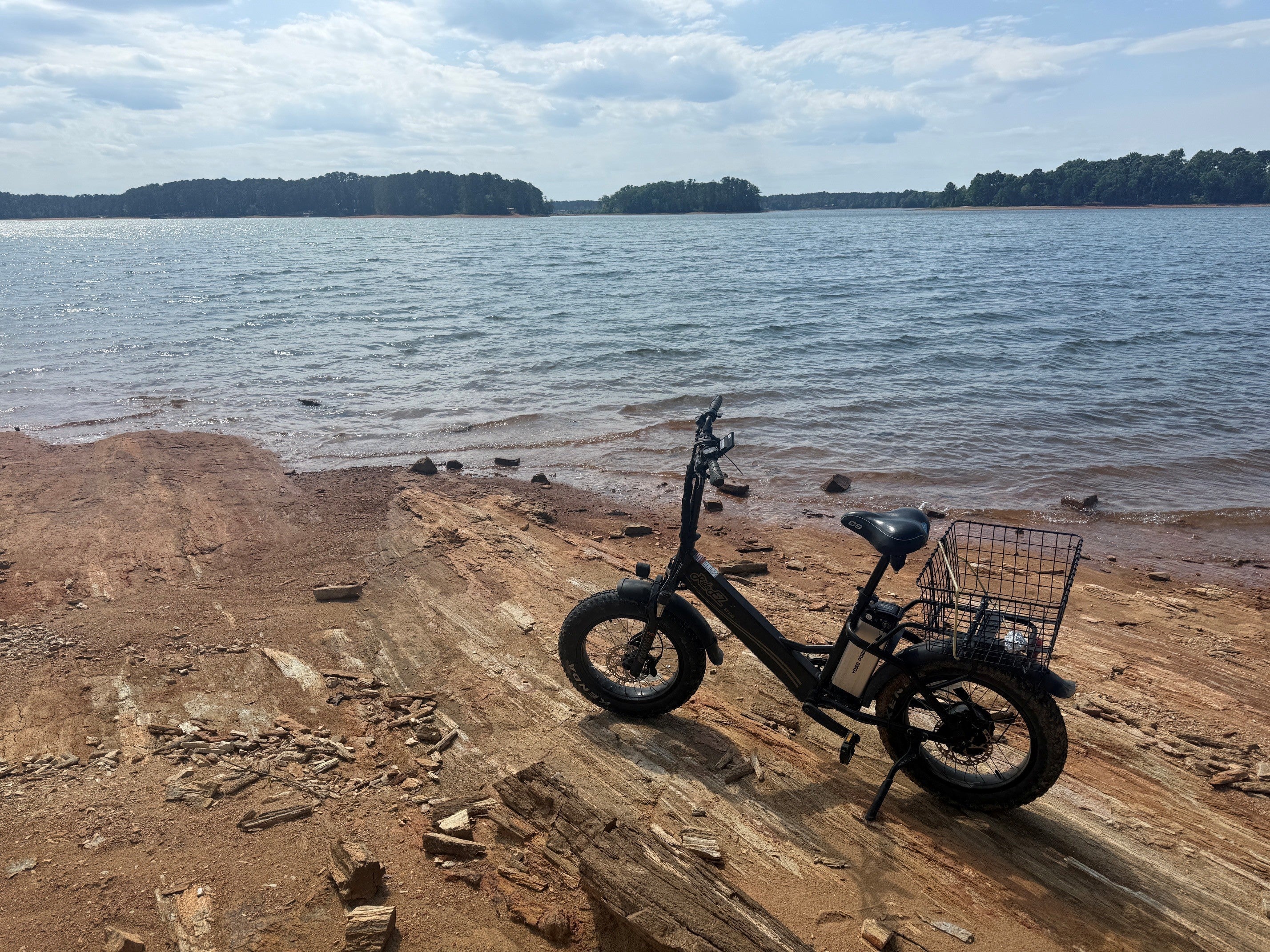
For hunters, this can mean getting closer to a stand or blind without making as much noise as a gas-powered vehicle. For anglers, it can make it easier to reach ponds, lakes, docks, and access points while carrying tackle or light gear. Around farms and private property, an e-bike can be useful for daily checks, quick trips between buildings, or moving around open land without constantly starting a truck.
Hunting E-Bike Laws: What You Need to Know
Before using an e-bike for hunting, it is important to understand that the rules can change depending on where you ride. E-bike laws are usually based on a combination of state law, public land rules, local trail rules, and hunting regulations.
In many areas, e-bikes are treated differently depending on their class, motor size, throttle use, and whether the trail or road is open to motorized travel. Some areas allow e-bikes anywhere traditional bicycles are allowed. Other areas may only allow them on roads or trails specifically marked for motorized use.
That means a hunting e-bike may be legal on one property but not allowed on another property just a few miles away.
The safest rule is this: do not assume an e-bike is allowed just because it is quiet or because it looks like a bicycle. Always check the rules for the exact land you plan to ride.
Public Land vs. Private Land
On private land, e-bike use usually depends on the landowner’s permission and any state hunting rules that apply. This makes e-bikes especially useful for farms, leases, hunting properties, campgrounds, and large private parcels where the owner allows them.
On public land, the rules are more specific. National forests, wildlife refuges, state parks, state wildlife areas, and BLM-managed land may each have their own access rules. Some properties allow e-bikes on certain roads or trails, while others restrict them in wildlife-sensitive areas, behind gates, or on non-motorized routes.
Hunters should also pay attention to rules about game retrieval. In some areas, riding an e-bike to access a hunting area may be allowed, but using any motorized device off-road to retrieve game may be restricted. Always check the land manager’s map and the current hunting regulations before your trip.
A Simple Checklist Before You Ride
Before taking an e-bike hunting, fishing, or riding outdoors, check these items:
- Is the road or trail open to e-bikes?
- Is your e-bike class allowed in that area?
- Are throttles allowed, or pedal assist only?
- Are there seasonal closures?
- Are there hunting-specific transportation rules?
- Are there restrictions on retrieving game?
- Do you need written permission on private land?
Checking these rules ahead of time can prevent fines, protect access for other riders, and help keep outdoor areas open for responsible e-bike use.
Why the ST100 Works Well Outdoors
The ST100 is a strong fit for outdoor and farm-style riding because it handles everyday utility use well. It rides comfortably around open properties, campgrounds, gravel paths, farm areas, and other outdoor settings where riders want something more convenient than walking but less bulky than a larger vehicle.
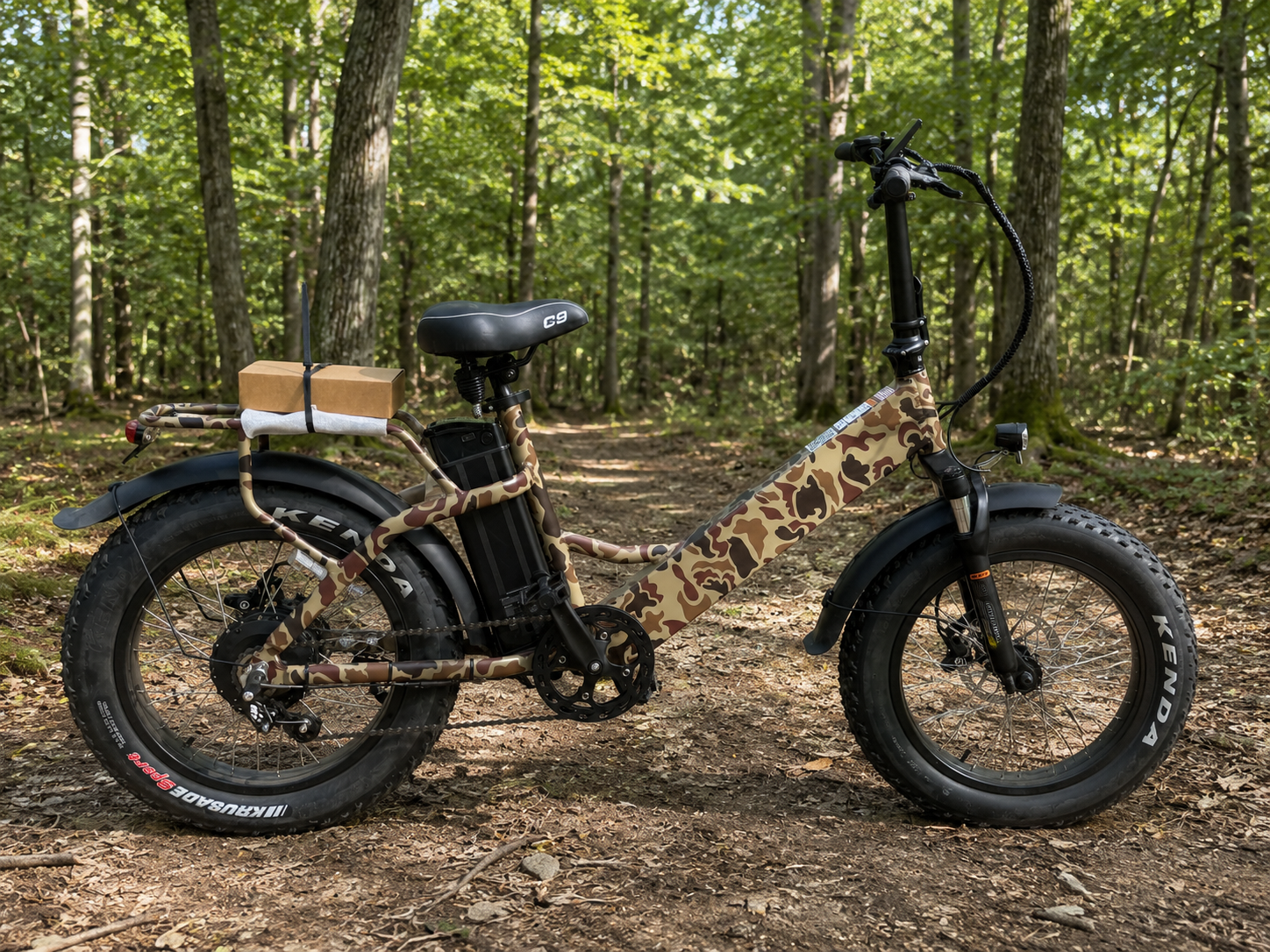
For hunters and outdoor riders, the ST100 can also be dipped in camo, giving it a more natural outdoor look for hunting properties, farm use, and rugged recreational riding. That makes it a good option for customers who want an e-bike that blends better into hunting, fishing, and outdoor environments.
Depending on where and how the bike is used, comfort can also be enhanced with a suspension seat. This can make a noticeable difference on rougher ground, gravel paths, farm lanes, and longer outdoor rides.
Useful for More Than Hunting
While many people think about hunting first, outdoor e-bikes are useful for a lot more than getting to a stand. They can help with:
- Checking trail cameras
- Riding around farms and private property
- Traveling around campgrounds
- Getting to fishing spots
- Carrying light gear
- Moving quietly through outdoor areas
- Riding between barns, sheds, docks, cabins, and campsites
For families, landowners, campground operators, and outdoor workers, an e-bike can become a practical daily-use tool.
Ride Responsibly
E-bikes are a great tool for outdoor use, but responsible riding matters. Stay on approved roads and trails, respect posted signs, avoid sensitive habitat, yield to other users, and follow all hunting and fishing regulations.
A quiet ride is one of the biggest advantages of an e-bike, but it also means other people and animals may not hear you coming. Ride carefully, slow down around blind corners, and be respectful of other hunters, hikers, landowners, and outdoor users.
Final Thoughts
For hunting, fishing, farming, camping, and general outdoor riding, an e-bike can be a practical and enjoyable way to cover more ground. The key is choosing the right bike, setting it up for your terrain, and understanding the rules where you plan to ride.
The ST100 is a strong choice for outdoor and farm-style use, especially with options like a camo dip and a suspension seat for added comfort. Whether you are riding around private property, heading to a fishing spot, or using it as a quiet utility bike outdoors, the ST100 gives riders a capable and versatile option for life outside.
Outdoor Access Reminder: eBike laws and hunting access rules can change depending on where you ride. Before using an eBike for hunting, fishing, or outdoor use, check your state rules and the rules for the land you plan to ride on.

Leave a comment
This site is protected by hCaptcha and the hCaptcha Privacy Policy and Terms of Service apply.