Choosing the right suspension fork is one of the most important decisions you can make when replacing, upgrading, or building a bike. A suspension fork affects comfort, control, handling, safety, and how the bike feels on the road or trail.
For eBikes, choosing the correct fork is especially important because eBikes are often heavier than standard bicycles and may place more stress on the front end. Whether you are riding around town, commuting, camping, exploring gravel roads, or taking your mountain bike on trails, the fork needs to match the bike properly.
There are many good fork options available, including RST forks for eBikes and mountain bikes. The key is making sure the fork fits your bike, matches your riding style, and has the correct specifications before you buy.
Why the Right Suspension Fork Matters
A suspension fork is designed to absorb bumps and help keep the front wheel stable on uneven surfaces. This can make the ride smoother, more comfortable, and more controlled.
The right fork can help with:
- Rough pavement
- Gravel roads
- Trails
- Potholes
- Campground roads
- Light off-road riding
- Mountain bike terrain
- Everyday comfort
The wrong fork, however, can create problems. If the wheel size, axle size, steerer tube, brake mount, or travel does not match your bike, the fork may not fit or may not ride correctly.
That is why checking the specs before buying is so important.
RST Forks for eBikes and Mountain Bikes
RST offers suspension forks for a wide range of riding styles, including eBikes, recreational bikes, and mountain bikes. Depending on the model, RST forks may be designed for comfort, trail riding, commuting, or more aggressive riding.
RST forks can be a practical option for riders who need a replacement fork or want to upgrade their current setup. Different models may include features such as air or coil suspension, lockout, rebound adjustment, different travel lengths, and different axle styles.
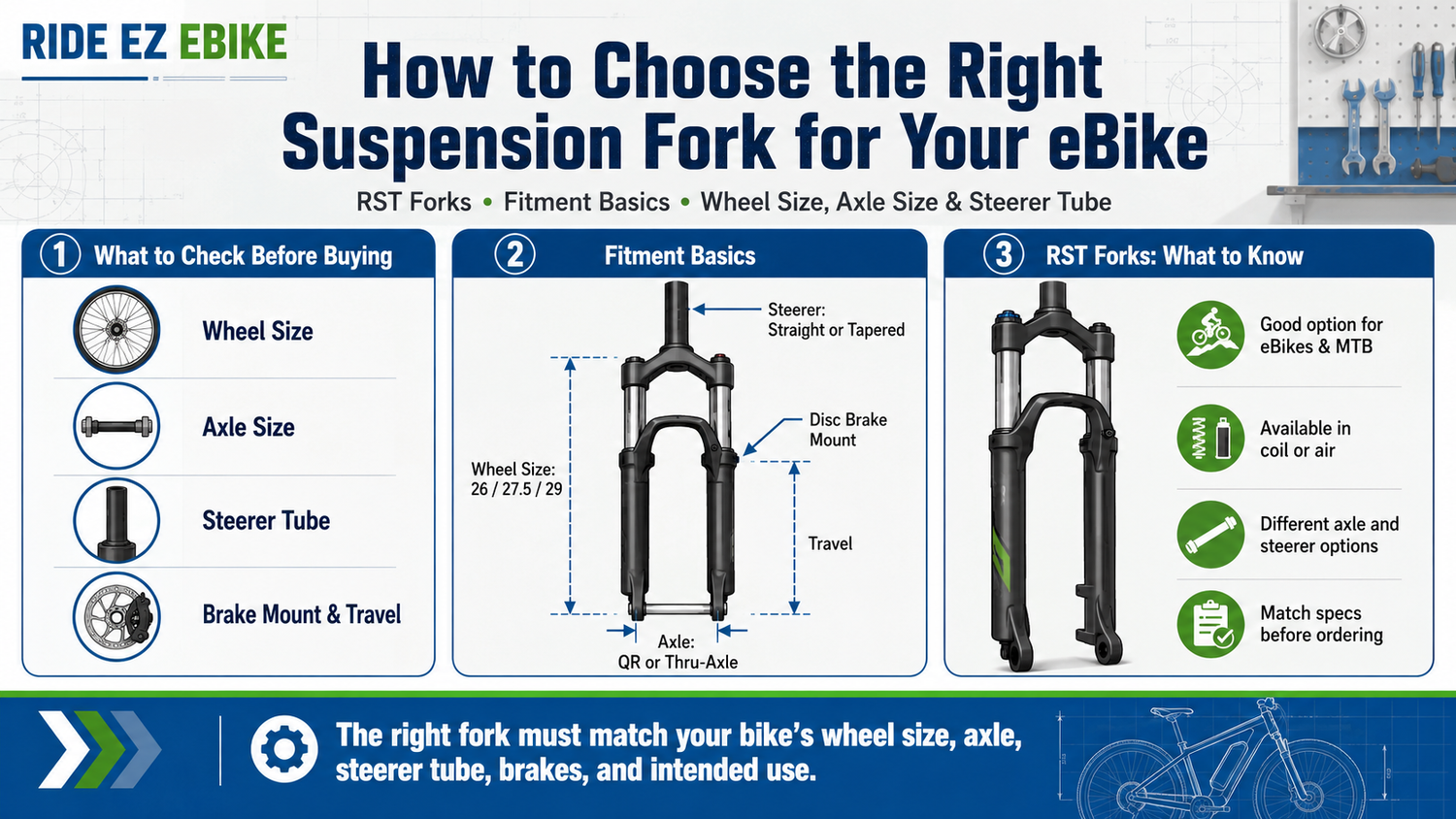
Because not every RST fork fits every bike, it is important to match the fork to the frame, wheel, brake setup, axle, and steerer tube before ordering.
Step 1: Match the Wheel Size
The first thing to check is wheel size. Suspension forks are made for specific wheel sizes, and the fork must match the wheel on your bike.
Common wheel sizes include:
- 20 inch
- 24 inch
- 26 inch
- 27.5 inch
- 29 inch
- 700c
A fork made for a 26 inch wheel is not the same as a fork made for a 29 inch wheel. Wheel size affects tire clearance, ride height, handling, and overall fit.
Before buying a fork, check the size printed on your tire or confirm the wheel size from your bike specifications.
Step 2: Match the Axle Size and Dropout Type
The axle is what holds the front wheel in the fork. Forks are made for different axle sizes and dropout types, so this must be checked carefully.
Common examples include:
- 9mm quick release
- 15mm thru axle
- 15x100mm
- 15x110mm Boost
- Other eBike or specialty axle sizes
A wheel with a 9mm quick release hub will not fit correctly in a fork made for a 15mm thru axle. A 15x100mm hub will not fit the same as a 15x110mm Boost setup.
Before ordering a fork, confirm both the axle diameter and the hub spacing.
Step 3: Match the Steerer Tube
The steerer tube is the top part of the fork that goes through the bike frame and connects to the stem and handlebars.
This is one of the most important fitment details.
Common steerer types include:
- Straight steerer
- Tapered steerer
- 1-1/8 inch steerer
- 1.5 inch tapered lower section
- Different steerer lengths
You need to know whether your bike uses a straight or tapered steerer tube. You also need to make sure the steerer tube is long enough for your frame, headset, spacers, and stem.
If the steerer tube is too short, the fork may not be usable on your bike.
Step 4: Check the Fork Travel
Fork travel refers to how far the suspension can compress. For example, a fork may have 80mm, 100mm, 120mm, 150mm, or more travel depending on the style of bike and riding use.
More travel is not always better. A fork with too much travel can change the bike’s geometry, raise the front end, affect handling, and put stress on the frame.
For everyday eBike riding, commuting, and recreational use, moderate travel is often enough. For mountain biking or more aggressive terrain, more travel may be preferred, but it still needs to match the frame’s intended design.
Always stay close to the travel range recommended for your bike.
Step 5: Check the Brake Mount
Your fork must match your front brake setup. Most modern eBikes and mountain bikes use disc brakes, but the mount type and rotor clearance still matter.
Before buying a fork, check:
- Disc brake mount type
- Rotor size compatibility
- Caliper fit
- Brake hose routing
- Whether adapters are needed
A fork that does not support your brake setup can create extra work or may not be suitable for your bike.
Step 6: Check Tire Clearance
Even if the wheel size matches, tire width still matters. Some forks can fit wider tires, while others have more limited clearance.
This is especially important for eBikes, fat-tire bikes, mountain bikes, and bikes used on gravel or mixed terrain.
Before choosing a fork, check your tire size and make sure the fork has enough clearance for the tire you plan to use.
Step 7: Choose Air or Coil Suspension
Suspension forks are commonly available in air or coil versions.
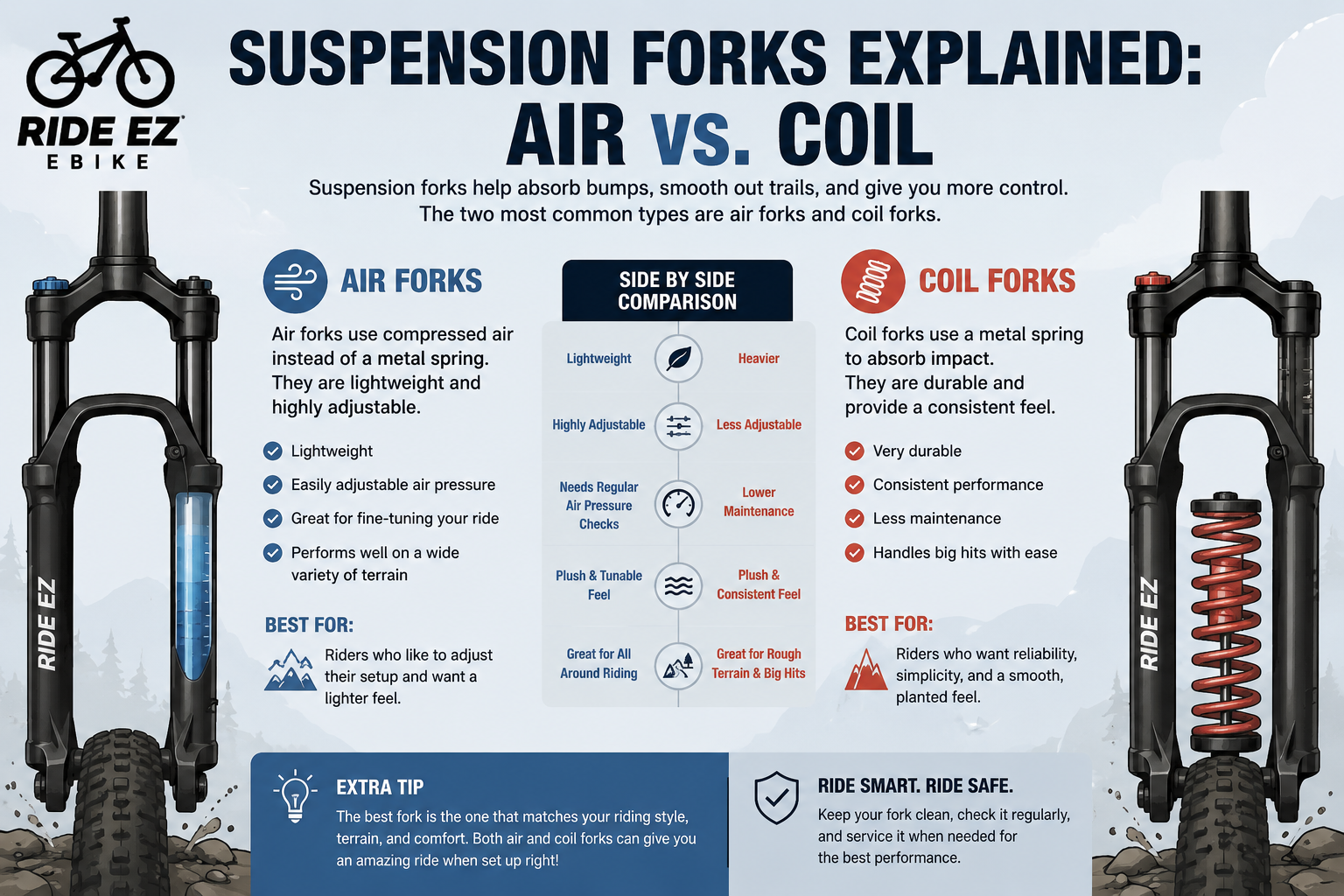
A coil fork uses a metal spring. Coil forks are usually simple, dependable, and practical for everyday riding.
An air fork uses pressurized air. Air forks are usually lighter and more adjustable, making them a good choice for riders who want to tune the fork to their weight and riding style.
For casual riding, commuting, and recreational use, a coil fork can work well. For riders who want more adjustment, lighter weight, or sportier performance, an air fork may be a better fit.
Step 8: Think About How You Ride
The best fork depends on how the bike will be used.
For commuting and everyday riding, comfort, durability, and easy maintenance may matter most. For camping and gravel roads, a fork with good bump absorption and reliable control can make the ride more enjoyable. For mountain biking, travel, stiffness, adjustability, and terrain capability become more important.
Ask yourself:
- Am I riding mostly pavement?
- Will I ride gravel or campground roads?
- Do I need the fork for trail riding?
- Is this for an eBike or standard bike?
- Do I want simple comfort or more performance?
- Do I need air adjustment?
- Do I need a stronger fork for heavier use?
The more clearly you know how you ride, the easier it is to choose the right fork.
What Information Should You Have Before Buying a Fork?
Before buying a suspension fork, gather as much information as possible.
Helpful specs include:
- Bike brand and model
- Wheel size
- Tire size
- Axle size
- Hub spacing
- Steerer tube type
- Steerer tube length
- Brake type
- Rotor size
- Fork travel
- Rider use
- Whether the bike is an eBike
- Current fork model, if known
Having these details makes it much easier to match the correct fork and avoid ordering something that does not fit.
Need Help Matching a Fork?
If you are not sure which suspension fork you need, send us your bike information and current fork specs. We can review the details and help you determine what type of fork may be the best fit.
This is especially important for eBikes because the correct fitment matters for safety, handling, and long-term performance.
When in doubt, do not guess. Wheel size, axle size, steerer tube, brake mount, and travel all need to work together.
Final Thoughts
Choosing the right suspension fork is about more than picking a brand or choosing the most expensive option. The fork needs to match your bike, your wheel, your axle, your steerer tube, your brakes, and your riding style.
RST forks can be a strong option for eBikes, recreational bikes, and mountain bikes, but the correct model must be matched carefully.
Before buying, always check your wheel size, axle size, steerer tube, brake mount, tire clearance, and fork travel. A properly matched fork can make your bike more comfortable, more controlled, and more enjoyable to ride.
The right fork helps your bike ride the way it should.

Leave a comment
This site is protected by hCaptcha and the hCaptcha Privacy Policy and Terms of Service apply.